Video Essay Topics: A Guide for Students and Creators
Search "video essay topics" and you will find two completely different people behind the same query. One is a student who has been assigned a video essay instead of a written one and needs a topic a teacher can actually grade. The other is a YouTube creator hunting for a subject that earns clicks and holds an audience.
They want almost opposite things, and most topic lists ignore that. They dump generic ideas on both audiences and help neither.
So this guide splits the difference openly. After a shared section on what makes any video essay topic good, it forks into two tracks:
- Track A - For students. Topics that are researchable, gradeable, and finishable in the few minutes an assignment allows.
- Track B - For creators. Topics with a thesis sharp enough to survive an oversaturated feed.
Pick your track. But read the next section first, because the one rule that unites both is also the rule almost everyone breaks.
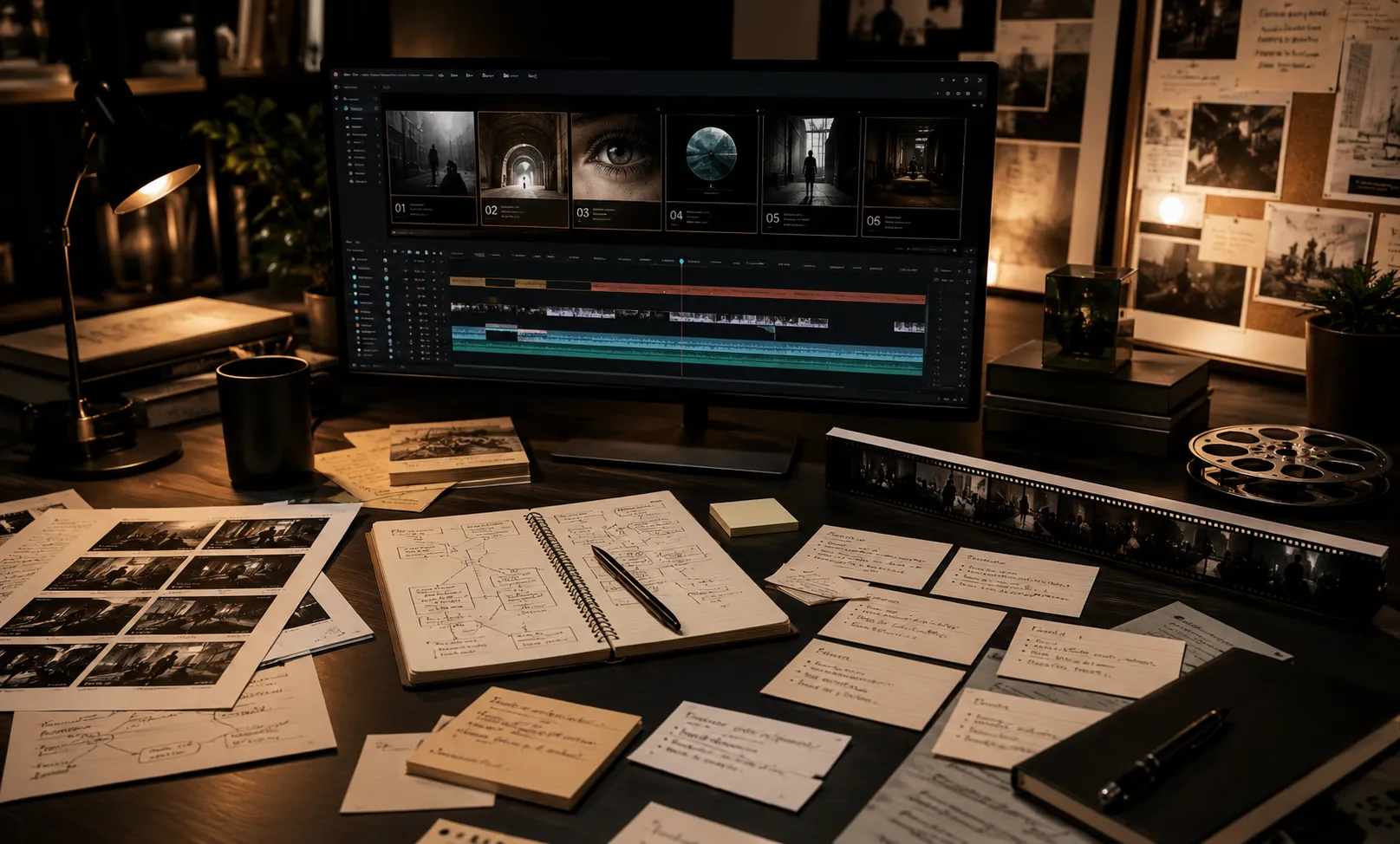
Table Of Contents
- The one thing both audiences get wrong: padding
- How to choose a video essay topic
- Track A - Video Essay Topics for Students
- Track B - Video Essay Topics for Creators
- How to turn any topic into a better title
- A simple video essay outline
- Where Visiva fits: visual development, not filler
- Frequently asked questions
The one thing both audiences get wrong: padding
Before any topic list, it is worth knowing what people who watch a lot of video essays actually complain about, because that is the bar your work has to clear.
The complaints are remarkably consistent across forums. Viewers say too many essays return to the same famous examples with no new angle. They complain about basic analysis dressed up in pseudo-intellectual vocabulary, long throat-clearing intros, and videos that stretch a ten-minute idea into a two-hour runtime.
By 2026 the complaint has a newer edge too: essays padded with generic, AI-looking stock footage, sensationalized titles, and arguments that sound smart without saying much.
Strip all of that away and the takeaway for your topic is simple. A good topic is one substantial enough to fill its runtime honestly, not one you will have to inflate. If you are already wondering how to stretch it, the topic is too thin, not your video too short. That instinct matters for everything below.
How to choose a video essay topic
Run any idea through this six-part test:
| Test | Question |
|---|---|
| Thesis | Can you state the argument in one sentence? |
| Evidence | Do you have examples, clips, data, articles, or scenes? |
| Stakes | Why should someone care now? |
| Visuals | Can you show the idea on screen? |
| Ending | Can you reach a satisfying conclusion? |
| Honesty | Can you make this point well without padding to hit a runtime? |
"Social media is bad" fails the thesis test because it is too broad to argue. "Why every app is trying to become TikTok" passes: a clear pattern, real examples, current relevance, and a natural endpoint.
That is the shared foundation. From here, the two tracks diverge.
Track A - Video Essay Topics for Students
If a teacher assigned this, your goals are different from a YouTuber's. University writing guides are blunt about what they are grading: a clear thesis, researchable evidence with proper citations, and a tight runtime. Many course briefs cap student video essays at 3 to 5 minutes. You are not optimizing for clicks. You are demonstrating that you can build an argument and support it with sources.
Two things creator-focused lists almost never mention matter enormously for school work:
- Citations and sourcing are graded. Treat clips, stills, and music as sources you must credit, the same as quotes in a written essay. Most rubrics ask for a bibliography or works-cited alongside the video.
- Copyright is a real constraint. University guides repeatedly warn that using copyrighted film, music, or footage can create problems for a graded project. Lean on properly licensed or Creative Commons media, and use short clips as cited evidence rather than entertainment.
Researchable, gradeable topics
- 1. How one local landmark's history reflects a bigger change in its community.
- 2. How a single advertising campaign shaped consumer behavior.
- 3. Why misinformation spreads faster than corrections.
- 4. How a piece of music uses structure to create a specific mood.
- 5. How one invention quietly reshaped daily life.
- 6. How a novel and its film adaptation make the same argument differently.
- 7. How climate change is framed in news media versus fiction.
- 8. The rhetoric of a famous speech: what makes it persuasive.
- 9. How a public space is designed to shape how people behave in it.
- 10. How fashion in one decade reflected its political moment.
These work for school because each has a clear claim, findable sources, and a scope you can cover in a few minutes. The trick is to narrow hard: "advertising shapes behavior" is a semester; "how one 2010s ad taught a generation to distrust ads" is a video essay.
A student workflow that mirrors a written essay
University libraries describe the process as nearly identical to writing a paper, just with more tools at the end: develop a narrow topic, write a thesis in one or two sentences, build an outline and a voice-over script around your evidence, storyboard your visuals, gather properly sourced media, then edit.
The storyboard is the step students skip and regret. It is your outline made visual, and it keeps a 4-minute project from sprawling.
Track B - Video Essay Topics for Creators
If you are making this for YouTube, your enemy is not a rubric. It is oversaturation. The topic has to be specific enough that yours is not the tenth identical essay this month. For every idea below, the win condition is the same: a fresh case study or a counterintuitive angle, not the canonical example everyone already used.
Pop culture
- 1. Why nostalgia drives modern entertainment, anchored to one recent example.
- 2. Why some franchises structurally cannot end.
- 3. How memes now rewrite a celebrity's reputation faster than press can.
- 4. Why award shows lost cultural gravity.
- 5. How a niche trend made the jump to mainstream, traced through one specific case.
Film and TV
- 6. Why opening scenes do more narrative work than endings get credit for.
- 7. How a single color choice changes how we read a character.
- 8. The difference between suspense and surprise, shown shot by shot.
- 9. Why a specific remake failed where the original worked.
- 10. The hidden structure of a great pilot episode.
For film especially, show the cause and effect: how a lighting choice changes a performance, how a cut shifts sympathy, or how sound changes a scene's meaning. That specificity is exactly what the "all analysis, no insight" complaint is about.
Creator culture
- 11. Why apology videos all follow the same script.
- 12. The rise of faceless channels, and which ones survived YouTube's 2025 inauthentic content update.
- 13. How Shorts quietly reshaped what long-form creators make.
- 14. Why "authenticity" itself became a performance.
- 15. How the video essay format got oversaturated: a self-aware essay about the very complaints in this article.
Video games
- 16. Why some open worlds feel empty while others do not.
- 17. How difficulty design is storytelling.
- 18. How sound design, not visuals, creates fear in horror games.
- 19. Why live-service economics changed how games are written.
- 20. What actually makes a game replayable.
Social commentary
- 21. Why everyone feels behind, structurally rather than personally.
- 22. How productivity content sells the anxiety it claims to cure.
- 23. Why online communities drift into echo chambers.
- 24. How "main character energy" quietly became a worldview.
- 25. Why we document experiences instead of having them.
The internet does not need another obvious rant stretched to thirty minutes. The way to win these is a specific lens and a willingness to complicate your own argument.
How to turn any topic into a better title
Use this formula:
Specific subject + tension + payoff
- "Why Open Worlds Feel Empty"
- "How TikTok Changed the Music Industry"
- "The Problem With Productivity Content"
- "How Thumbnails Became YouTube's Real Opening Scene"
Resist the "epidemic" reflex. Sensationalized titles are now a recognized tell of low-effort work, not a hook.
A simple video essay outline
- 1. Hook: Open on the contradiction or question, not a history lesson.
- 2. Context: Give only what the viewer genuinely needs.
- 3. Thesis: State the argument plainly.
- 4. Evidence: Put examples in a logical order.
- 5. Counterpoint: Admit what complicates your argument. This is what separates analysis from a rant.
- 6. Conclusion: Land on an insight, not a recap.
Where Visiva fits: visual development, not filler
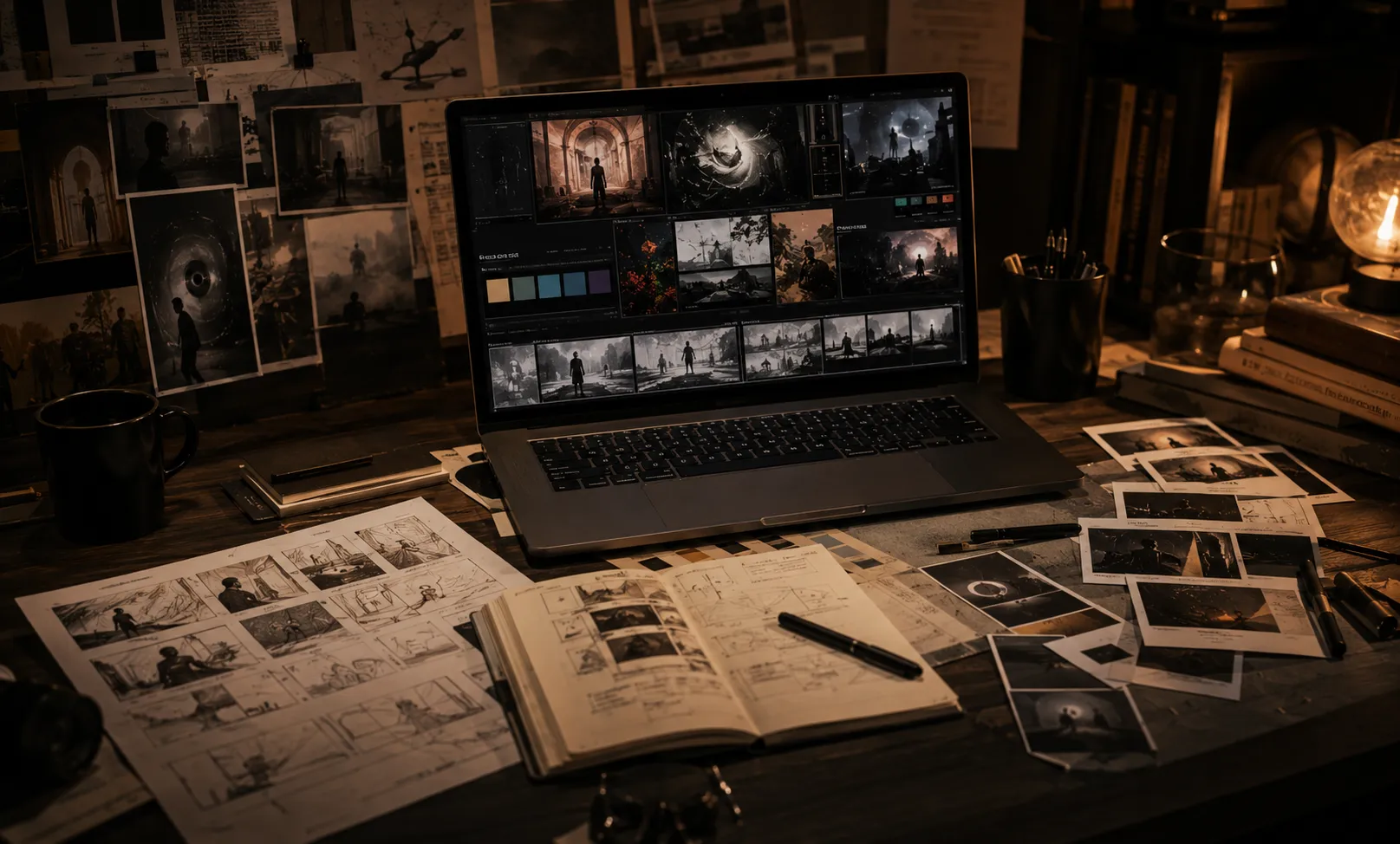
There is a real tension to navigate here. The same forums that praise good essays openly mock videos padded with generic AI-looking stock footage. So the honest use of an AI image tool in a video essay is narrow and specific.
That narrow, legitimate zone is pre-production visual development: prototyping a thumbnail, sketching abstract visuals for a concept that does not exist as footage, or designing a consistent style for your chapter cards and section breaks. Visiva's text-to-image workflow and image-to-image workflow can help build the look before you edit.
What it is not for: the analysis itself. Your argument, sourced clips, commentary, and point of view stay yours. That is what makes it a video essay instead of a slideshow, and it also keeps the work aligned with YouTube's inauthentic-content monetization guidance.
For adjacent planning angles, pair this with topics on video games or creator trend research.
Frequently asked questions
What makes a good video essay topic?
A good video essay topic has a clear single-sentence argument, findable evidence, a reason to care now, enough visual material to show on screen, and enough substance to fill its length without padding.
How long should a video essay be?
Make it as long as the argument needs, and no longer. School assignments are often capped at 3 to 5 minutes; beginner YouTube essays often work between 8 and 15. If you are stretching to hit a number, the idea is too thin.
Can a video essay be a school assignment?
Yes. Many instructors assign video essays in place of written ones, grading the same things: thesis, research, structure, citations, and proper credit for any clips, stills, or music you use.
Can I use AI to make a video essay?
Within limits. AI tools are useful for visual development: thumbnails, mood boards, chapter cards, and concept art. The argument, evidence, sourced clips, and point of view should remain yours.
How do I research a video essay?
Start with a thesis, gather and compare sources, outline the argument, storyboard the visuals, then script around evidence rather than around vibes.
Sources
- YouTube Help, channel monetization policies and the 2025 inauthentic content update: support.google.com
- Macalester College Video Essays 101: macalester.edu
- Excelsior OWL video essay guide: owl.excelsior.edu
- ECU Library guide to video essay referencing and copyright: ecu.au.libguides.com
- MLA Style Center guidance on video essays: style.mla.org
- ResetEra viewer discussion of repeated video essay angles: resetera.com